
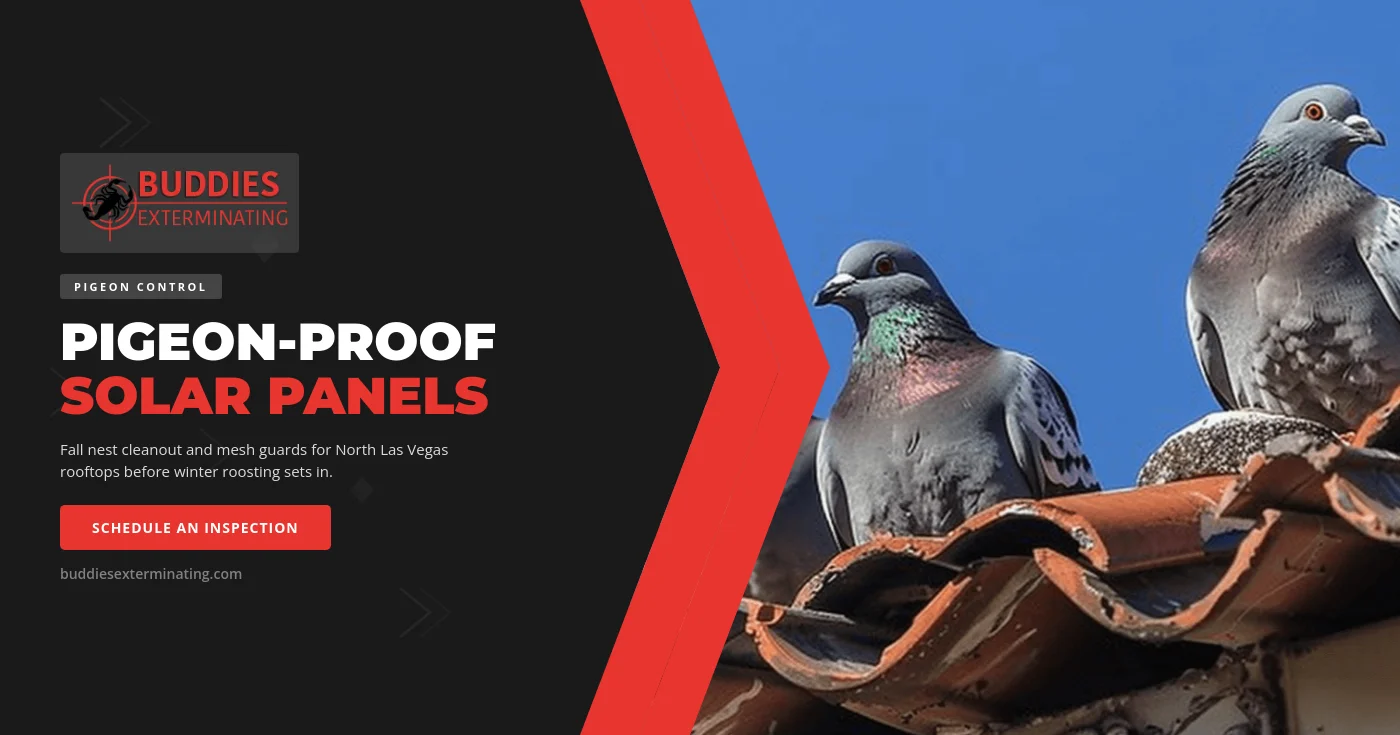
Fall in the desert brings a welcome break from triple-digit heat. It also brings a quieter problem to many rooftops: pigeons settling into the shaded gap beneath solar panels. If you’ve heard cooing overhead or spotted twigs poking out from your array, timely pigeon control North Las Vegas homeowners can count on makes a real difference before the cooler months lock in the habit.
Many newer subdivisions across the Las Vegas area have panels mounted over tile roofs, which creates exactly the sheltered ledge pigeons look for. Here at Buddies, we hear about pigeons under solar panels more often once October arrives and birds start choosing where they’ll spend the winter.
Below, we explain why the birds move in, the warning signs, the damage and health concerns, why DIY fixes fall short and how professional pigeon exclusion works. We finish with a fall checklist and answers to common questions.
Why North Las Vegas Pigeons Move Under Solar Panels as October Nights Cool
Feral pigeons, also called rock pigeons, descend from birds that nested on cliff ledges. A rooftop solar array recreates that setting almost perfectly: a flat, protected shelf with cover overhead, shade during the day and shelter from wind at night.
Timing matters too. October in the Las Vegas Valley typically brings highs around the low 80s and lows that can dip into the high 50s or low 60s, based on general National Weather Service climate patterns. By December and January, nights can fall into the 30s. The roof deck under a panel holds warmth longer than open air, so as evenings cool, that pocket becomes more appealing for roosting and nesting.
Pigeons also breed year-round wherever food and shelter are available. A pair can raise several broods a year, usually two eggs at a time, and they tend to return to the same nest site again and again. That loyalty is what turns a single visit into a long-term rooftop pigeon nesting problem.
In North Las Vegas, where block after block of homes share similar roof designs and panel layouts, birds pushed off one roof often look for the same setup next door. That’s why fall, before winter roosting sets in, is the ideal window to act.
Warning Signs Pigeons Have Taken Over Your Rooftop Solar Array
Pigeons are rarely subtle once they’ve moved in, but early clues are easy to miss if you don’t spend much time looking at your roof. Watch and listen for these signs:
- Cooing or scratching overhead, especially early in the morning and around dusk.
- Twigs, straw or feathers sticking out from the edges of your panels.
- Droppings collecting on the roof below the array, along the eaves, on patio furniture or on the driveway.
- Birds flying in and out from under the panels or lining up along the ridge.
- Streaks or splatter on the glass surface of the panels.
- Debris in gutters or downspouts, even after a recent cleaning.
- A dip in your monitoring app’s output that doesn’t line up with weather or season.
Two or more of these together usually point to an active nest. If you notice eggs or young birds, hold off on disturbing anything. It’s also important to confirm the birds are pigeons rather than mourning doves or white-winged doves, which are common in southern Nevada and protected under federal law. We identify the species before any work begins.
The Real Costs: Roof Damage, Clogged Gutters, Chewed Wiring and Lost Panel Efficiency
It’s tempting to think of pigeons as a simple nuisance, but the damage adds up over a season or two.
Roof Wear and Staining
Pigeon droppings are acidic and build up quickly in a sheltered spot where rain rarely reaches. Over time, that buildup can stain tile, wear down roofing materials and trap moisture against the roof surface, while stick nests hold even more debris in place.
Clogged Gutters and Drains
Nesting material, feathers and droppings drift toward the roof edge and collect in gutters and drains. During a heavy monsoon storm or winter rain, blocked drainage can push water under tiles and toward fascia boards.
Chewed or Damaged Wiring
The wiring beneath your panels isn’t designed to handle birds pecking at it, nesting on it and soiling it day after day. Damaged or displaced wires may affect performance and could need a solar technician to repair.
Lost Panel Efficiency
Droppings on the glass block sunlight from reaching the cells. Exact losses vary by panel, coverage and system design, so we won’t guess at a number, but any shading reduces output. Add possible wiring trouble and roof repairs, and early solar panel bird proofing usually costs far less than the damage it prevents.
Health Risks of Pigeon Droppings and Nesting Debris Around Your Home
Beyond the mess, droppings and nesting debris can carry real health concerns. According to the Centers for Disease Control and Prevention, histoplasmosis is caused by a fungus that grows in soil and material contaminated with bird or bat droppings. Cryptococcosis is another fungal infection associated with pigeon droppings, and psittacosis, a bacterial illness linked to birds, is less common but possible.
The biggest risk usually comes from disturbing dried droppings. Scraping, sweeping or using a leaf blower on old buildup can release fine dust and spores into the air you breathe. That’s why we discourage homeowners from climbing up to brush out nests on their own.
Pets that spend time on patios beneath the roofline can come into contact with droppings and feathers, and nest material may attract mites that find their way indoors. Households with young children, older family members or anyone with respiratory concerns have extra reason to leave cleanup to professionals with protective gear.
If someone in your home develops symptoms after contact with bird droppings, talk with a healthcare provider. We’re pest professionals, not doctors, so our focus is on removing the source and cleaning the area thoroughly for your peace of mind.
Why DIY Spikes, Fake Owls and Reflective Tape Rarely Work on Solar Panels
Plenty of do-it-yourself deterrents are on store shelves, and we understand the appeal. Most simply aren’t built for a gap beneath solar panels.
- Fake owls and hawks: Pigeons quickly learn that a plastic predator never moves, and they often perch right beside it.
- Reflective tape and spinners: Like other visual scare devices, these tend to work only briefly before birds get used to them.
- Spikes: Spikes can discourage perching on ledges, but they don’t close the opening under the panels where nests actually form.
- Store-bought mesh rolls: Without the right clips and fit, loose mesh can sag, leave gaps or break down in the desert sun.
The University of California Statewide IPM Program’s pest note on pigeons explains that scare devices generally offer only short-term relief, while physical exclusion is the more reliable long-term approach.
There’s also the roof itself. Climbing onto tile, reaching under panels and handling contaminated debris raises the chance of falls, cracked tiles and dust exposure. Many homeowners try several gadgets before calling for help, and by then the colony has grown. Effective pigeon exclusion starts with sealing the space, not scaring the birds.
How Professional Pigeon Exclusion Works: Nest Cleanout, Sanitizing and Panel Mesh Guards
Here at Buddies, we treat pigeon exclusion as a complete process rather than a quick patch. Every roof is a little different, but the general steps look like this.
1. Inspection and Species Check
We inspect the roof, the full perimeter of the array and nearby ledges or vents. We confirm the birds are pigeons, look for eggs or chicks and note any damage to tile, gutters or visible wiring that your solar provider may want to review.
2. Nest Cleanout
Next, we remove nests, sticks, feathers and accumulated droppings from under and around the panels, using protective equipment and careful handling to limit dust. If active nests are present, we explain the options and timing before moving forward.
3. Sanitizing
Once debris is cleared, we disinfect and deodorize the area. This helps break down residue that can draw birds back to the same spot.
4. Panel Mesh Guards
Finally, we install durable coated or galvanized wire mesh around the edge of the array to close the gap between the panels and the roof. It attaches with specialized clips rather than drilling into panels or roofing, stays low-profile and still allows airflow beneath the panels.
Because manufacturer and installer policies vary, we recommend reviewing your solar warranty terms before any work, and we’re happy to walk you through our method so you can confirm it with your provider. The same approach works for homeowners seeking pigeon removal Las Vegas wide.
Fall Rooftop Checklist to Keep Pigeons From Returning This Winter
Whether you’ve already had pigeons or want to stay ahead of them, a little fall attention goes a long way:
- Walk the perimeter and look up at your array for twigs, feathers or birds coming and going.
- Check gutters and downspouts for nesting debris.
- Remove food sources like spilled birdseed, outdoor pet food and uncovered trash.
- Fix dripping irrigation and standing water that give birds an easy drink.
- Look at other openings such as roof vents and eave gaps. Spaces that shelter birds can also invite rodents, so watch for signs that call for rat and mice extermination.
- Watch for stinging insects building in protected corners of the roofline; our bees and wasps control service can help.
- Inspect existing mesh for sagging, gaps or loose clips.
- Talk with neighbors who have panels, since pigeons often move from roof to roof.
Fall is also practical for rooftop work. Summer roof surfaces in the desert can climb past 150°F, which makes careful installation difficult. October and November offer comfortable conditions to finish before winter roosting begins. If your HOA has rules about rooftop changes, check those too.
Frequently Asked Questions: Pigeon Control North Las Vegas Homeowners Ask About Solar Panels
Why do pigeons nest under solar panels?
The space is flat, shaded, sheltered from wind and warmer than open air on cool nights. It mimics the cliff ledges pigeons naturally prefer, and once a pair nests there, they tend to keep coming back.
How much does solar panel bird proofing cost in North Las Vegas?
Cost depends on the size and layout of your array, your roof type, how much cleanup is needed and whether there’s existing damage. Rather than quote a generic number, we provide pricing after an inspection so you know exactly what your home needs.
Is it legal to remove pigeon nests?
Feral pigeons are non-native and aren’t protected under the federal Migratory Bird Treaty Act. Mourning doves and white-winged doves are protected, so their nests shouldn’t be disturbed. That’s why we confirm the species first. Local or HOA rules may also apply.
Will the pigeons just move to my neighbor’s roof?
Sometimes they try. Exclusion makes your roof unavailable, so birds look elsewhere. When neighbors seal their panels and remove food sources too, pressure drops across the whole street.
Schedule Pigeon Control North Las Vegas Homes Can Rely On This Fall
Pigeons under solar panels rarely leave on their own, and the damage, mess and health concerns grow as the colony settles in for winter. Acting this fall, while rooftop conditions are comfortable, gives you the best chance of breaking the cycle.
Here at Buddies, we’re a dedicated pest control service for homeowners throughout the Las Vegas area, and pigeon control North Las Vegas residents can rely on is part of what we do every day. From nest cleanout and sanitizing to durable mesh guards, we’ll help protect your roof, your panels and your peace of mind. Contact Buddies today to schedule your rooftop inspection.
How Do We Keep Pigeons From Nesting Under Your Solar Panels?
When pigeons move in beneath a solar array, they rarely leave on their own. We handle the problem from start to finish so your roof and panels stay clean and protected heading into the cooler months.
- Inspection and species check: We look over your roof, the full array perimeter and nearby ledges, and we confirm the birds are pigeons rather than protected doves before any work begins.
- Nest cleanout: We remove nests, sticks, feathers and built-up droppings using protective gear and careful handling to limit dust.
- Sanitizing: We disinfect and deodorize the area to break down residue that draws birds back.
- Panel mesh guards: We install durable coated or galvanized mesh around the edge of the array with specialized clips, closing the gap without drilling into your panels or roof.
We also point out any damage we notice to tile, gutters or visible wiring so you can follow up with your solar provider, and we encourage you to review your panel warranty terms before installation. Fall is an ideal time for this work, since rooftops are cooler and birds haven’t yet settled into their winter roosting spots.
Our goal is simple: give you lasting relief and real peace of mind, without the mess and frustration of DIY gadgets that pigeons quickly learn to ignore. Every home is different, so we provide pricing after we’ve seen your roof and array.
Want the full picture on warning signs, damage, health concerns and our fall rooftop checklist? Read our complete guide to stopping pigeons under solar panels this fall.