
October should be the best month to be outside. The heat finally breaks, the pool is still inviting, and the patio becomes command central for football Sundays, Halloween parties and long dinners under the string lights. Then the uninvited guests arrive: wasps hovering over the guacamole, crawling into soda cans and patrolling the edge of the pool. If you’ve started searching for fall wasp control Las Vegas homeowners can rely on, you’re not alone. This is the season when colonies hit their peak.
Here at Buddies, we see the same pattern across Las Vegas every year. Nests that went unnoticed all summer suddenly hold hundreds or thousands of workers, and those workers have new priorities that put them right next to your plate.
Below, we explain why fall wasps act more aggressive, how to tell paper wasps from yellowjackets, where they nest around desert homes, what draws them to your gatherings, and when it’s time for professional nest removal.
Why October Is Peak Wasp Season on Las Vegas Patios
Most people think of wasps as a summer problem, but the calendar tells a different story. Social wasps such as yellowjackets build a brand-new colony every year. A single queen that survived winter starts a small nest in spring, raises a handful of workers, and from there the population snowballs. By late summer and fall, a healthy yellowjacket nest can hold thousands of workers.
In much of the country, the first hard frost shuts that cycle down in September or October. Our valley is different. October highs typically start in the 80s and slide into the 70s, and freezing nights usually don’t arrive until December, if they arrive at all. That means local colonies can keep foraging at full strength well into late fall, longer than in most of the U.S.
At the same time, October is when we move our lives outdoors. After months of triple-digit heat, patios, backyard kitchens and pool decks finally feel comfortable again. We’re hosting tailgates, birthday cookouts and Halloween get-togethers, and we’re setting out exactly the foods and drinks fall wasps crave. Peak colony size plus peak patio season is the reason this month can feel like a wasp invasion.
What Changes in Wasp Behavior as Fall Colonies Peak
Their Diet Switches to Sugar
During spring and summer, worker wasps hunt caterpillars, flies and other insects to feed the growing larvae. In return, the larvae produce a sugary liquid the adults drink. As the colony raises fewer young late in the season, that built-in sugar supply dries up. Workers go looking for sweets on their own—soda, juice, ripe fruit, cocktails—while still scavenging protein like grilled meat and pet food. The UC Statewide IPM Program’s guide to yellowjackets and other social wasps describes this shift as a main reason wasps become picnic pests late in the year.
Bigger Nests, Stronger Defense
A fall nest represents an entire season of work, and it’s packed with workers ready to defend it. Vibrations from a lawn mower, a slammed patio door or a ball bouncing off a wall can trigger a group response. Yellowjackets can sting more than once, so one disturbed nest can mean several stings in seconds.
More Wandering Workers
With thousands of foragers and fewer chores at home, workers range widely and linger around any reliable food. That’s why fall wasps seem “aggressive” even when they’re mostly hungry and persistent.
Paper Wasps vs. Yellowjackets: Telling Las Vegas’s Fall Wasps Apart
Not every wasp on your patio is the same insect, and knowing which one you’re dealing with changes the approach. Exact species vary, but the two groups we run into most in fall are paper wasps and yellowjackets. The University of Nevada, Reno Extension is a helpful resource if you want to learn more about Southern Nevada insects.
Paper Wasps
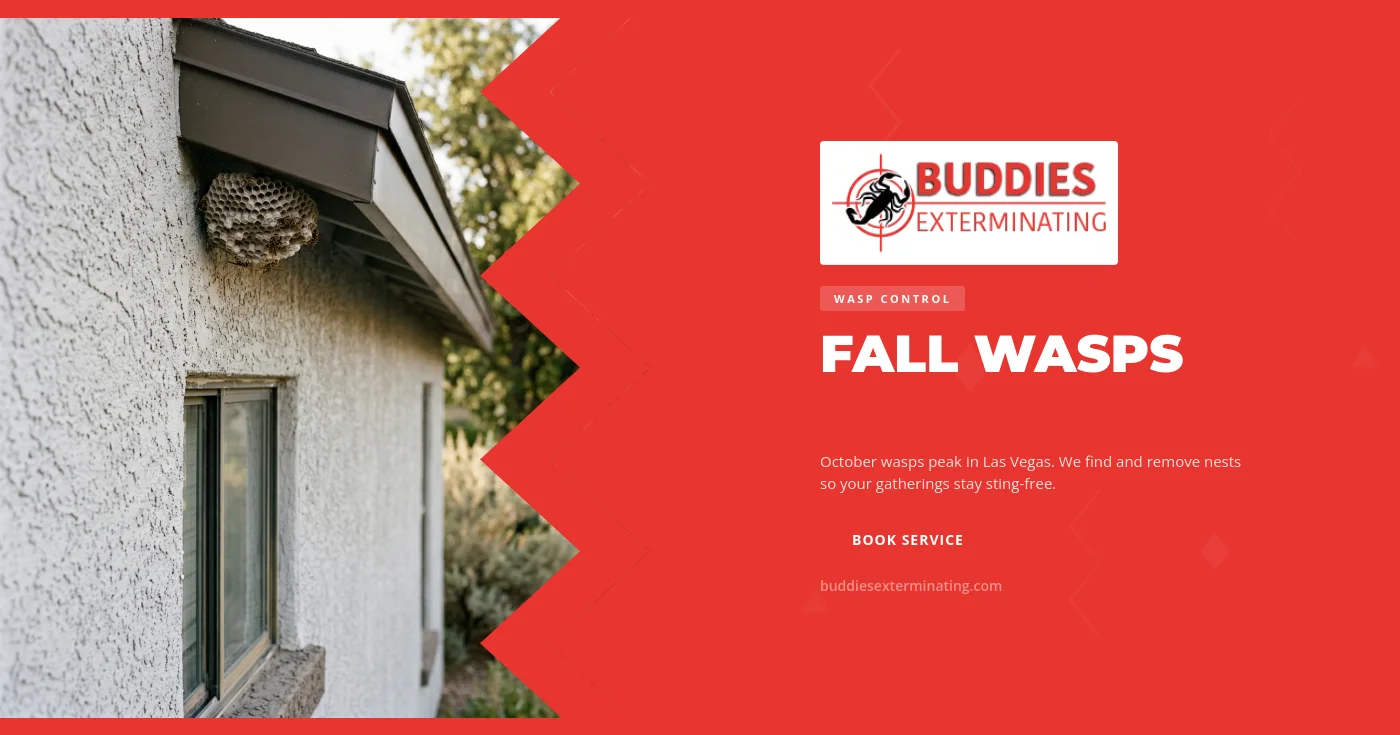
Paper wasps are slender, with long legs that dangle below them in flight. Several Polistes species are common in the desert Southwest. Their nests look like an open, upside-down umbrella of gray paper with hexagonal cells visible from below, usually hanging from a single stalk. Paper wasps are generally less aggressive than yellowjackets and rarely go after human food, but they will defend a nest that gets bumped or sprayed.
Yellowjackets
Yellowjackets are stockier, shorter-legged and boldly patterned in black and yellow. They fly fast and tend to zigzag around food. Many species nest underground or inside enclosed voids, so you may only see a steady stream of wasps flying in and out of a small opening. These are usually the scavengers crowding your soda cans and burger plates in October, and they’re the ones most likely to sting in numbers.
Where Late-Season Wasps Nest Around Desert Homes: Eaves, Patio Covers, Block Walls and Irrigation Boxes
Desert homes offer wasps a long list of sheltered, shaded spots. When we inspect a property, these are the places we check first:
- Stucco eaves and soffits: Overhangs give paper wasps shade, and nests often sit right above doors and windows.
- Patio covers: Alumawood and wood covers have channels, beams and corners that hide nests just a few feet over your table.
- Block walls: Weep holes, cracked caps and open cores give wasps hollow spaces to build inside.
- Irrigation and meter boxes: Valve boxes stay cool, dark and slightly damp, a favorite for nesting and water collection.
- Grills, furniture and play sets: Grill lids that sit untouched, hollow chair legs and the underside of a swing set are frequent surprises.
- Dense shrubs and ground voids: Thick plantings, old rodent burrows and gaps under pavers can hide ground-nesting yellowjackets.
Because many of these spots are enclosed, a nest can grow all summer without anyone noticing. The first clue is often a line of wasps flying in and out of a weep hole or the lid of a valve box. If you spot that kind of traffic, keep people and pets back and note the location rather than poking at it.
What Draws Wasps to Outdoor Dining, Pools and Fall Gatherings
Once you understand what fall workers need, it’s easy to see why your gatherings are so attractive. They’re looking for three things, and a typical October party offers all of them.
Sugar. Open soda cans, juice boxes, wine glasses, fruit platters, desserts and Halloween candy are irresistible to late-season yellowjackets. A wasp hiding inside a can is one of the most common ways people get stung on the lip or mouth.
Protein. Burgers, hot dogs, deli trays and pet food left on the patio are all fair game. Yellowjackets will carve off bits of meat to carry back to the nest.
Water. In the desert, water is as valuable as food. Wasps collect it to cool their nests and to mix the wood pulp they build with. Pools, fountains, misters, dripping hose bibs, irrigation emitters and pet bowls all become regular stops. That’s why so many homeowners notice wasps landing on the pool edge in fall, and why a pool full of swimmers and wasps can be a stressful mix, especially for kids.
Trash and recycling bins near the patio round out the buffet, offering leftover sweets and scraps all day long.
Smart Habits to Reduce Wasp Encounters During Patio Season
You can’t make your yard invisible to wasps, but a few habits make it far less rewarding:
- Cover food and drinks. Keep dishes covered until serving, and use lidded cups with straws instead of open cans.
- Clean up promptly. Wipe spills, clear plates and pick up fallen fruit quickly.
- Manage trash. Use bins with tight lids, keep them away from seating and rinse them regularly.
- Feed pets indoors. Bowls of food on the patio are a protein magnet.
- Fix drips. Repair leaky hose bibs and emitters and empty standing water, which also supports mosquito control.
- Stay calm. Swatting can provoke a wasp. Move slowly away instead.
Store-bought traps can help, but only against yellowjackets; paper wasps generally ignore them. According to UC IPM, sweet baits tend to work better late in the season and protein baits earlier. Keep in mind that traps catch foragers but don’t remove the nest. Those same crumbs and sugary spills draw ants too, so if you’re seeing trails along the patio, our ant control service pairs well with a fall wasp visit.
When to Call a Professional for Wasp Nest Removal
A tiny paper wasp nest just starting in spring is one thing. A fall nest packed with defensive workers is another. We recommend calling a professional when:
- The nest is larger than a golf ball, or you can’t see its full size.
- Wasps are coming and going from a wall void, weep hole, irrigation box or the ground.
- The nest is high on an eave or patio cover and requires a ladder.
- Anyone in your household has a known sting allergy.
- The nest sits near a door, play area, pool or dining space you use daily.
- You’ve tried sprays or traps and the activity keeps coming back.
Over-the-counter sprays often reach only the outer workers, and disturbing a void nest can push wasps deeper into walls or out toward you. Our team identifies the species, treats the nest where it sits and removes accessible nests so the area is less likely to become a recurring hotspot. Learn more about our bees and wasps control service and how we handle stinging insects around homes.
One important note: if someone is stung and has trouble breathing or swelling of the face or throat, that may be a severe allergic reaction. Call 911 right away.
Frequently Asked Questions About Fall Wasp Control in Las Vegas
Do wasps die off in winter in Las Vegas?
Mostly, but later than you might expect. Workers typically die once consistently cold weather sets in, and only newly mated queens overwinter in sheltered spots. Because freezes here often hold off until December or later, activity can continue well past October.
Why are wasps drinking from my pool?
Wasps need water to cool their nests and build with paper pulp. In a dry climate, your pool is one of the easiest sources around. Frequent pool visitors often mean a nest is nearby.
Do wasps reuse old nests?
Paper wasps and yellowjackets generally don’t reuse last year’s nest, but sheltered spots that worked once can attract new queens the next spring. Removing old nests and sealing gaps helps reduce repeat problems.
Can I remove a paper wasp nest myself?
Very small, newly started nests are sometimes manageable, but fall nests are larger and more defensive. If the nest is overhead, inside a void or near anyone who may be allergic, it’s best left to professionals.
Do fake nests or decoys work?
Results are mixed. Decoys may discourage some paper wasps from starting nearby in spring, but they won’t move an established colony or stop scavenging yellowjackets.
Book Fall Wasp Control in Las Vegas With Buddies
October gatherings should be about good food and good company, not dodging stings. Late-season colonies are at their biggest, and our long, mild falls give them plenty of time to crowd your patio, pool and outdoor kitchen. Effective fall wasp control Las Vegas families can count on starts with finding the nest, identifying the species and treating it the right way.
Buddies is a locally based pest control team that knows the stucco eaves, block walls and patio covers found across our valley. If wasps are taking over your outdoor space, contact Buddies today to schedule an inspection, and let’s get your patio back before the next party.
Why are there so many wasps on my patio in October?
If wasps seem to be everywhere this time of year, you’re seeing a normal—but frustrating—part of the wasp life cycle. Colonies that started with a single queen in spring reach their largest size in late summer and fall. As the colony raises fewer young, workers lose their built-in sugar supply and start scavenging soda, fruit, desserts, grilled meat and pet food on their own. Add our long, mild desert falls and a full calendar of outdoor gatherings, and your patio becomes their favorite stop.
Here’s what we look for when we visit a home with fall wasp activity:
- Paper wasp nests under stucco eaves, patio covers and grill lids
- Yellowjacket traffic in and out of block-wall weep holes, irrigation boxes and ground voids
- Water sources like pools, fountains and dripping emitters that keep wasps coming back
- Food and trash habits that make your outdoor space extra rewarding
We identify the species, treat the nest where it sits and remove accessible nests so you can enjoy your outdoor space with more peace of mind. Traps and sprays may knock down a few foragers, but they rarely reach the heart of a large fall colony—and disturbing a hidden nest can make things worse.
Want the full picture on why late-season wasps act more aggressive, how to tell paper wasps from yellowjackets, and simple habits that cut down on encounters? Read our complete guide to fall wasp control and patio season. When you’re ready, we’re here to help you take back your patio, pool deck and outdoor kitchen.