
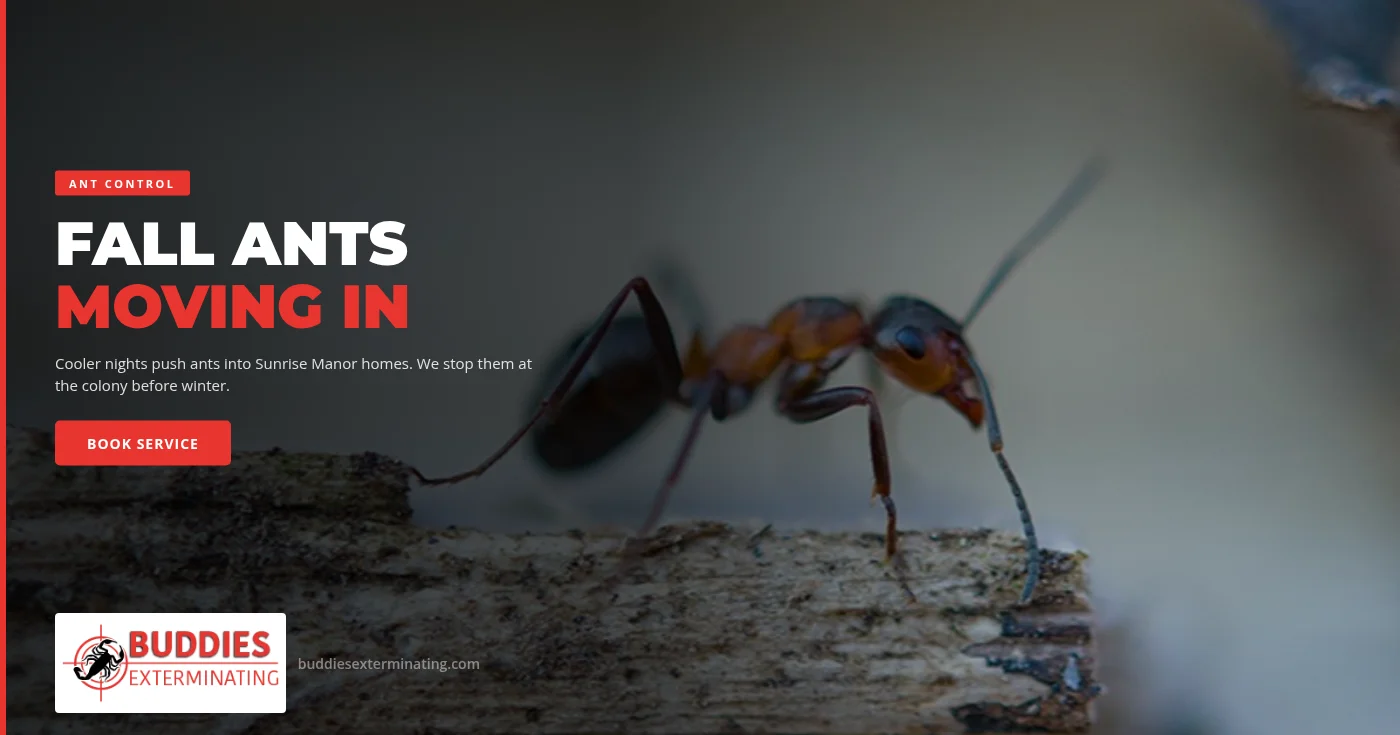
You wiped the counters last night, and by morning a thin line of ants is marching from the baseboard straight to the pet food bowl. If that sounds familiar this November, you’re in good company. As nights cool across the valley, ant activity often shifts from the yard into the house, and that’s when many homeowners start looking for ant control in Sunrise Manor.
Sunrise Manor sits on the east side of the Las Vegas Valley, and many of its neighborhoods are filled with older slab-on-grade homes. Warm afternoons, chilly nights, shrinking sprinkler schedules and the extra cooking that comes with Thanksgiving all combine to make late fall a surprisingly busy season for ants. The ones you see on the counter are only scouts. The colony is usually tucked into the soil, a wall void or a crack in the slab nearby.
Here at Buddies, we get a lot of calls this time of year from people who are puzzled that ants seem to arrive just as the weather turns. In this post, we’ll explain why that happens, where ants slip inside, how fall irrigation changes play a role, why spraying the trail you can see tends to backfire and how we target the colony before winter settles in.
Why Ants Stay Active in Sunrise Manor Long After Summer Ends
In much of the country, the first hard freeze shuts ant activity down for months. Our desert works differently. November in the Las Vegas Valley typically brings afternoon highs around the mid-60s and overnight lows around the mid-40s. That is still comfortable foraging weather for ants during a good part of each day.
Several species are commonly reported around the valley, including pavement ants, Argentine ants, odorous house ants and pharaoh ants, with harvester ants showing up in more open, desert-landscaped yards. Pavement ants in Las Vegas are especially common around driveways, sidewalks and patio slabs, where they nest under the concrete and push small piles of soil up through the joints. Argentine and odorous house ants can form large colonies, often with many queens, and they are quick to follow moisture and sweets indoors.
So do ants stay active in winter in southern Nevada? Mostly, yes, just at a slower pace. Colonies don’t truly hibernate here. Activity drops on the coldest nights, but a run of mild days can bring workers right back out, and colonies that have settled inside a warm wall or under a heated slab may keep foraging most of the season. That’s why fall is the best window to deal with them, before they’re established indoors for the winter.
How Cooler November Nights Push Ant Colonies Toward Your Home
Ants are cold-blooded, so they’re constantly hunting for moderate temperatures and shelter. When nights cool sharply compared with October, the soil near the surface loses heat quickly after sunset. Your home, on the other hand, keeps radiating warmth. A concrete slab that soaked up sun all afternoon and sits under a heated living space is an inviting spot for a colony looking to ride out the cooler months.
Food matters too. Outdoor food sources thin out as plants slow down and other insects become scarcer, while kitchens get busier. Thanksgiving baking, holiday leftovers, crumbs under the toaster and pet food left out overnight all give foraging workers a reason to keep coming back. Once a scout finds a reliable meal, it lays down a scent trail, and within hours you can have a steady line of ants along the baseboards after a cool fall night.
Some ants simply hitch a ride. Potted plants brought indoors for the season, firewood stacked by the back door and boxes of decorations from the garage can all carry ants inside. Before you bring anything in, give it a quick look and a shake, and keep firewood off the ground and away from exterior walls.
Common Fall Entry Points: Slab Cracks, Baseboards, Door Thresholds and Plumbing Gaps
Ants need surprisingly little room to get inside. Most of the fall activity we see comes through a handful of predictable spots.
Slab Cracks and Expansion Joints
Older slab homes settle over the years, leaving hairline cracks in the foundation and gaps along expansion joints and garage floors. If you’ve wondered how to stop ants coming through slab cracks, start by noting exactly where they appear. Ants coming up through the floor usually point to a nest in the soil below, so sealing the crack helps, but it won’t remove the colony underneath.
Baseboards and Wall Voids
Small gaps between baseboards and flooring connect directly to wall voids, where ants can travel unseen between rooms. Trails that seem to start and stop at the baseboard often mean ants are moving behind the wall.
Door Thresholds and Weatherstripping
Worn door sweeps, cracked thresholds and sliding door tracks are common gaps, especially on patio doors that face irrigated planting beds.
Plumbing Gaps
Openings where pipes enter under sinks, behind toilets and around water heaters give ants both a way in and the moisture they want. Caulking these gaps reduces entry points, though sealing on its own rarely solves an active infestation.
How Fall Sprinkler Schedules and Landscaping Create Ant Hotspots Near the Foundation
Watering rules in southern Nevada change with the seasons. The Southern Nevada Water Authority generally limits landscape watering to three assigned days a week in fall and one assigned day a week from November through February. It’s worth checking the current schedule for your address, since the rules can be updated.
When watering drops off, the soil across most of the yard dries out quickly. Ants follow whatever moisture is left, and that’s often right against your house: drip emitters tucked next to the slab, a leaking valve box, a patch of wet mulch under a shrub or a hose bib that drips. That’s a big part of how irrigation changes in fall affect ant colonies near the foundation. Colonies shift toward the last damp ground they can find, which puts them inches from your entry points.
Landscaping can make the trip even easier. Shrubs, vines and tree limbs touching walls or rooflines give ants a path that skips the ground altogether. A few simple fixes help:
- Move drip emitters a foot or two away from the foundation where possible.
- Repair leaking valves, emitters and hose bibs.
- Pull thick mulch back from the slab and leave a dry strip next to the house.
- Trim plants so nothing touches the walls, windows or roof.
- Watch for indoor moisture too, such as slow leaks under sinks.
Why Spraying Visible Ant Trails Makes Fall Infestations Worse
Grabbing a can of spray and blasting the trail feels satisfying. Unfortunately, it usually kills only the workers you can see, which are a small fraction of the colony. Many store-bought sprays are also repellent, so the surviving ants scatter, abandon the old trail and start new ones, sometimes in other rooms.
With species like pharaoh ants, repellent sprays can cause a colony to split into several smaller colonies, a process called budding. One trail becomes three, and the problem spreads deeper into your walls. The University of California’s integrated pest management program, in its Pest Notes on ants, recommends slow-acting baits that workers carry back to the nest instead of spraying trails, with outdoor sprays limited to a perimeter band around the foundation when they’re needed at all.
Baits take patience. You may see more ants at first while they feed, and it can take anywhere from several days to a couple of weeks before activity drops, depending on the species and the size of the colony. The key is matching the bait to what the ants are actually eating, since some species prefer sugars in one season and proteins or fats in another. That’s where a trained eye makes a real difference. Here at Buddies, we ask customers to hold off on spraying before our visit so the trails can lead us to the source.
How Professional Ant Control Targets the Colony Before Winter
Effective ant colony treatment is about the nest, not the trail. Here’s how we approach fall service.
Inspection and Identification
We start by walking the property inside and out, following trails back toward slab cracks, baseboards, plumbing gaps and irrigated beds. Identifying the species tells us which baits and methods are likely to work best.
Targeted Baiting
We place baits along active trails and near entry points, using formulations the colony will accept and carry back to the queens. Placements are chosen with kids and pets in mind, out of the way of curious hands and paws.
Exterior Perimeter Protection
Outside, we focus on the foundation, the areas around irrigation lines and the spots where moisture collects, creating a barrier that helps stop new foragers before they reach your walls.
Prevention Advice and Follow-Up
We point out the moisture problems, plant contact and sealing opportunities we find, then check back as needed to confirm the colony is under control.
Fall is also when other pests look for shelter. If you’re seeing roaches near the water heater or webs in the garage, our cockroach control and spider control services can be paired with your ant visit. We provide pest control in Las Vegas and nearby valley communities, so we know how local homes and yards behave this time of year.
Frequently Asked Questions About Fall Ant Control in Sunrise Manor
Why do I see more ants inside in November when it’s getting colder?
Cooler nights push colonies toward warmth and shelter, and homes hold heat well after sunset. At the same time, outdoor food and moisture become scarcer while kitchens get busier with holiday cooking. That combination is why so many people notice ants in the house in November across Las Vegas neighborhoods.
Do ants die off in winter in southern Nevada?
Not usually. Activity slows on the coldest nights, but colonies stay alive, and mild days bring workers back out. Ants that have moved into a warm wall or under a slab may stay active for much of the winter.
Is fall ant control in Sunrise Manor worth it if I only see a few ants?
In most cases, yes. A handful of ants on the counter is often the visible edge of a much bigger colony nearby. Treating in fall, before colonies settle indoors for winter, is generally easier than dealing with an established infestation later.
Is professional ant treatment pet-friendly?
We take pets and children into account on every visit. We choose products and placements carefully, keep baits out of reach and let you know if there are any areas to avoid while a treatment dries. If you have specific concerns, just tell us before we start.
Schedule Ant Control in Sunrise Manor Before Winter Settles In
Ants don’t take the winter off here, and the trails you see this month are a sign that a colony is looking for a warm place to stay. Sealing gaps, fixing irrigation leaks near the slab and skipping the spray can all help, but the lasting fix is reaching the colony itself. Here at Buddies, we’re a local pest control team serving the Las Vegas area, and we’re ready to help you get ahead of fall ants before they move in for the season.
If you’re ready for ant control in Sunrise Manor that goes after the source, contact Buddies to schedule your visit. We’ll find where they’re coming from and help keep your kitchen clear through the holidays.
Why Do Ants Keep Coming Back Inside Every Fall, and What Can We Do About It?
Ants return each fall because the colony that sent them is still out there, usually under the slab, inside a wall void or in the damp soil next to your foundation. Wiping up the trail or spraying it only removes the scouts. We focus on the part you can’t see.
When we visit, here’s what you can expect:
- A full inspection inside and out, tracing trails back to slab cracks, baseboards, door thresholds and plumbing gaps.
- Species identification so we choose baits the colony will actually accept and carry back to the queens.
- Targeted baiting placed with kids and pets in mind, out of the way of curious hands and paws.
- Exterior perimeter protection around the foundation and irrigation lines, where fall moisture draws foraging ants.
- Practical prevention advice on drip emitters, mulch, plant contact and sealing opportunities we find.
We also keep an eye out for other pests that look for shelter as the weather cools, so if roaches, spiders or scorpions are part of the picture, we can talk through those too.
Our ant control service is built around reaching the colony rather than chasing trails, which gives you lasting relief and real peace of mind heading into the holidays. If ants are already marching across your counters, or you’d simply like to get ahead of them before winter, reach out to us and we’ll set up a visit that fits your schedule.