
If you've recently returned from a trip or stayed at a Las Vegas area hotel, the last thing you want to discover is that you brought home an unwanted hitchhiker. Knowing the bed bug signs Summerlin NV homeowners should watch for can mean the difference between catching a small problem early and facing a full-blown infestation. At Buddies Exterminating, we help local families spot the warning signs before things get out of hand. In this guide, we cover what to look for, how to inspect your home, and what to do if you find evidence of bed bugs.
Bed bugs are master hitchhikers. They hide in hotel linens, luggage, secondhand furniture, and even clothing — then travel home with unsuspecting guests. Once inside, they spread quickly and are notoriously difficult to eliminate without professional help. The good news: when you know what to look for, early detection gives you a real advantage.
Why Spring Is Peak Season for Bed Bug Infestations in Summerlin
Spring brings peak travel season to the Las Vegas Valley, and that means elevated bed bug risk for homeowners throughout the area. Spring break sends thousands of visitors through local hotels, resorts, and vacation rentals. When those guests return home — or when Summerlin residents come back from their own trips — bed bugs often come along for the ride.
Warmer temperatures also accelerate the problem. According to the U.S. Environmental Protection Agency, bed bugs reproduce most rapidly in warm indoor environments — exactly what Nevada homes provide year-round. A small group of hitchhikers introduced in early spring can grow into a significant infestation by summer.
Spring also sees an uptick in secondhand furniture sales and moves. A used mattress or sofa purchased without a thorough inspection is one of the most common ways bed bugs enter a home. Understanding the seasonal risk puts you in a better position to take precautions during the months when exposure is highest.
Top Warning Signs You Have Bed Bugs in Your Home
Many people assume bed bug bites are the clearest indicator of an infestation. In reality, bites alone are unreliable — not everyone reacts visibly, and reactions can mimic mosquito bites or allergic rashes. Physical evidence found in and around your sleeping areas is far more dependable. Here's what to look for:
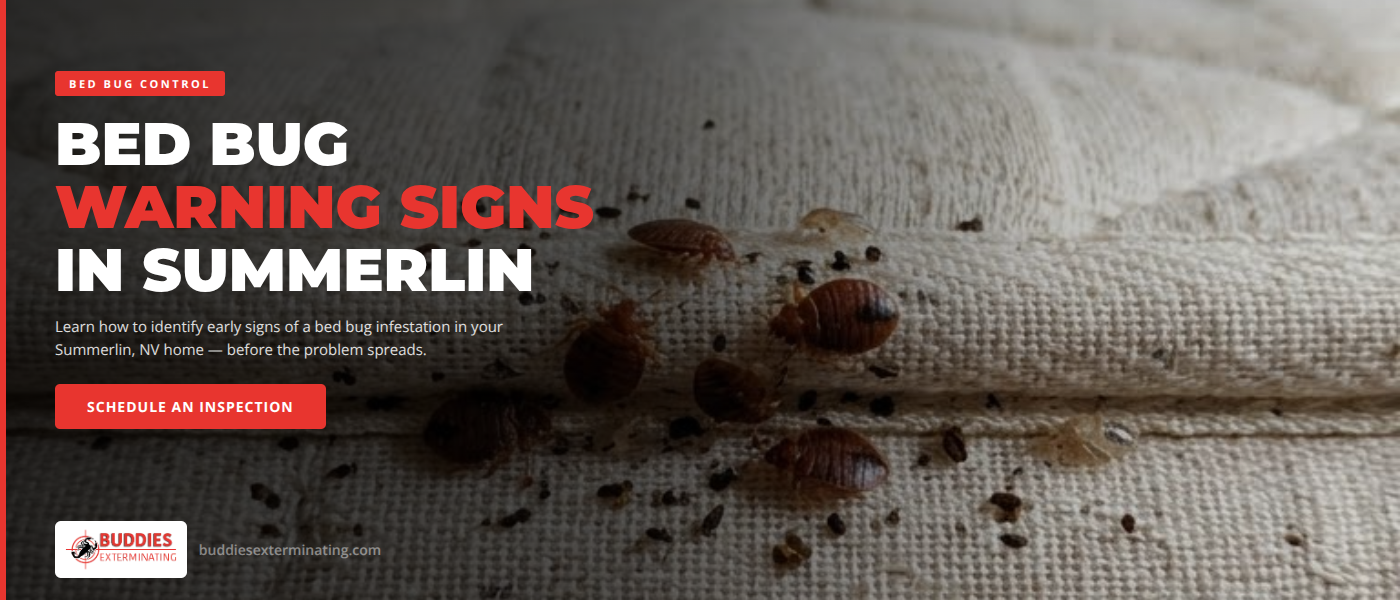
- Reddish-brown stains on bedding. Small rust-colored spots on sheets, pillowcases, or the mattress surface are often caused by bed bugs being crushed during sleep. Look for these near mattress seams and along the edges of fitted sheets.
- Dark fecal spots. Bed bug excrement appears as tiny dark dots — roughly the size of a bullet point — that may bleed into fabric like marker ink. Common locations include mattress seams, behind headboards, along baseboards, and in upholstered furniture folds.
- Shed skins and eggshells. As nymphs grow, they shed pale yellow, translucent exoskeletons. Tiny white eggshells (approximately 1mm) accumulate alongside them in harborage areas. Finding shed skins confirms an active, reproducing infestation.
- A musty, sweet odor. A heavy infestation can produce a distinctive sweet, musty smell from the pheromones bed bugs release. If your bedroom has an unexplained odor combined with any other signs listed here, act immediately.
- Live bugs. Adult bed bugs are reddish-brown, flat, and roughly the size of an apple seed. Spotting even one live bug almost always indicates many more are hidden nearby — these insects are expert hiders during daylight hours.
How to Inspect Your Bedroom, Furniture, and Luggage for Bed Bugs
A methodical inspection is the most effective way to confirm or rule out a bed bug problem. You'll need a bright flashlight and a flat tool — a credit card works well — to probe seams and crevices.
Mattress and box spring: Strip all bedding and set it aside in sealed bags. Examine every seam, fold, tag, and piping of the mattress under direct light, then flip it and check the underside. Inspect the box spring's fabric cover and lift a corner to look underneath. Look for staining, shed skins, and live insects throughout.
Bed frame and headboard: Bed bugs frequently hide in the joints, screw holes, and cracks of wooden bed frames. Remove the mattress and box spring, then inspect every inch of the frame including the undersides of slats. Pull wall-mounted headboards away from the wall and check both the back of the headboard and the wall surface behind it.
Nearby furniture and wall gaps: Nightstands, dressers, and upholstered chairs within a few feet of your bed are common secondary hiding spots. Check drawer undersides, furniture backs, electrical outlets, and baseboard gaps. Bed bugs can compress themselves to the thickness of a credit card and fit into nearly any crack.
Luggage after travel: Before bringing luggage into your bedroom after any trip, inspect every seam, pocket, and zipper fold with a flashlight. Place all clothing directly into sealed bags and launder immediately in hot water, then dry on high heat for at least 20 minutes. Store inspected luggage in sealed bags when not in use.
What to Do Immediately If You Find Bed Bugs in Summerlin
Discovering evidence of bed bugs is alarming, but your first actions can either contain the problem or make it significantly worse. Follow these steps:
- Do not use store-bought sprays or foggers. Over-the-counter pyrethroids and bug bombs often cause bed bugs to scatter deeper into walls and adjacent rooms — expanding a contained problem into a home-wide infestation.
- Isolate and launder bedding immediately. Seal sheets, pillowcases, and comforters in plastic bags before transporting them to the laundry. Wash in hot water and dry on high heat for at least 20 minutes. This kills bed bugs and eggs at all life stages.
- Vacuum your sleeping area thoroughly. Use a crevice tool on mattress seams, the bed frame, and surrounding floors. Seal the vacuum bag immediately and dispose of it outside.
- Reduce clutter near the bed. Clutter gives bed bugs more harborage sites and makes professional treatment less effective. Clear the area around and under your bed as much as possible.
- Call a licensed pest professional. Both the EPA and CDC recommend professional pest management as the most reliable path to elimination. Contact Buddies Exterminating for a thorough inspection and targeted treatment plan.
Why DIY Bed Bug Treatments Rarely Work in Nevada Homes
DIY bed bug control has a consistently poor track record, and there are specific reasons why these approaches fall short in Nevada homes.
Resistance is the first obstacle. Many bed bug populations throughout the Las Vegas Valley have developed resistance to pyrethroid-based insecticides — the active ingredient in most hardware-store sprays. These products may kill bugs on direct contact but can't penetrate the harborage areas where the majority of the population lives and breeds.
Eggs compound the problem. Bed bug eggs are coated with a protective layer that resists most chemical treatments. Even if a spray eliminates adult bugs, new nymphs hatch from surviving eggs every 10 to 14 days — restarting the cycle. Effective elimination requires multiple targeted treatments timed around the full lifecycle.
Store-bought products also can't reach the hiding spots that matter. Bed bugs squeeze into mattress internals, wall voids, and behind electrical outlet plates — spaces no consumer spray can penetrate. Professional heat treatment raises the entire room to temperatures lethal to bugs at every life stage, reaching harborage sites that topical products never touch.
Delaying professional intervention also gives the infestation more time to spread. If you suspect bed bugs in your Las Vegas Valley home, skip the hardware store and contact a professional from the start. You'll save time, money, and a significant amount of stress.
Buddies Exterminating: Summerlin's Local Bed Bug Experts
When it comes to bed bug control in Summerlin, working with an experienced local team makes all the difference. We understand the travel patterns, seasonal pressures, and housing types that make the Las Vegas Valley uniquely challenging for bed bug prevention and treatment.
Our team provides thorough inspections, customized treatment plans, and professional-grade elimination methods designed to address every life stage of an infestation. We also offer treatment for a wide range of Nevada pests, including scorpions, cockroaches, and spiders. If you've noticed any of the warning signs described in this guide, don't wait. Reach out to Buddies Exterminating today to schedule an inspection.
Frequently Asked Questions About Bed Bug Signs in Summerlin
What are the first signs of bed bugs in my home?
The most reliable early signs are physical evidence rather than bites. Look for small reddish-brown stains on sheets or mattress seams, tiny dark fecal spots near the headboard or baseboards, and pale yellow shed skins in mattress folds. If you find any of these, contact a pest professional for confirmation and next steps.
Can I see bed bugs without a magnifying glass?
Yes — adult bed bugs are visible to the naked eye. They're roughly the size of an apple seed, flat, and reddish-brown. Nymphs are smaller and lighter, and eggs are white and about 1mm long. A bright flashlight during a careful inspection will help you spot them in seams and crevices where they like to hide.
How do I know if a Summerlin hotel stay exposed me to bed bugs?
Inspect your luggage thoroughly before unpacking, and wash all clothing in hot water immediately after returning. Over the following two to three weeks, watch for unexplained welts on exposed skin and check your mattress and bedding for stains or dark spots. Early action is critical — the sooner you identify an introduction, the easier treatment becomes.
Do bed bugs only live in the mattress?
No — bed bugs use any harborage site close to a sleeping host. Common hiding places include bed frames, headboards, nightstands, baseboards, electrical outlet covers, upholstered furniture, and even electronics near the bed. A professional inspection covers all of these areas, not just the mattress.
How long does professional bed bug treatment take?
Treatment time depends on the size of the infestation and the method used. Heat treatments for a single room may take several hours; whole-home treatments typically require most of the day. Most cases need at least two visits to address eggs that hatch after the initial treatment. We'll walk you through exactly what to expect when you schedule with us.
Protecting Your Home from Bed Bugs Year-Round
Spotting bed bug signs early is the most effective form of protection for any Summerlin household. Whether you've just returned from spring break travel or noticed something unusual on your mattress, trust your instincts — an early inspection is always worth it. Contact our team to schedule a bed bug inspection and get expert guidance on keeping your home and your family's well-being protected year-round.